There is still a lot of noise about getting people “back to the office”. But that debate often skips an obvious question: back to what, exactly?
If the answer is rows of hot desks filled with people on back-to-back video calls, it’s not surprising that enthusiasm is limited. I’ve written before about the future of the office and, more recently, about hybrid work and so-called “watercooler moments”.
My view hasn’t really shifted. Offices still have a role. But that role is about collaboration, not simply attendance.
So rather than arguing about policies, it’s more interesting to ask what a genuinely good office would be like:
Imagine a world where offices adapt to people, not the other way around. Where meetings don’t start with five minutes of technical fumbling. Where space is shared fairly, energy is used sensibly, and design decisions are backed by evidence rather than habit.
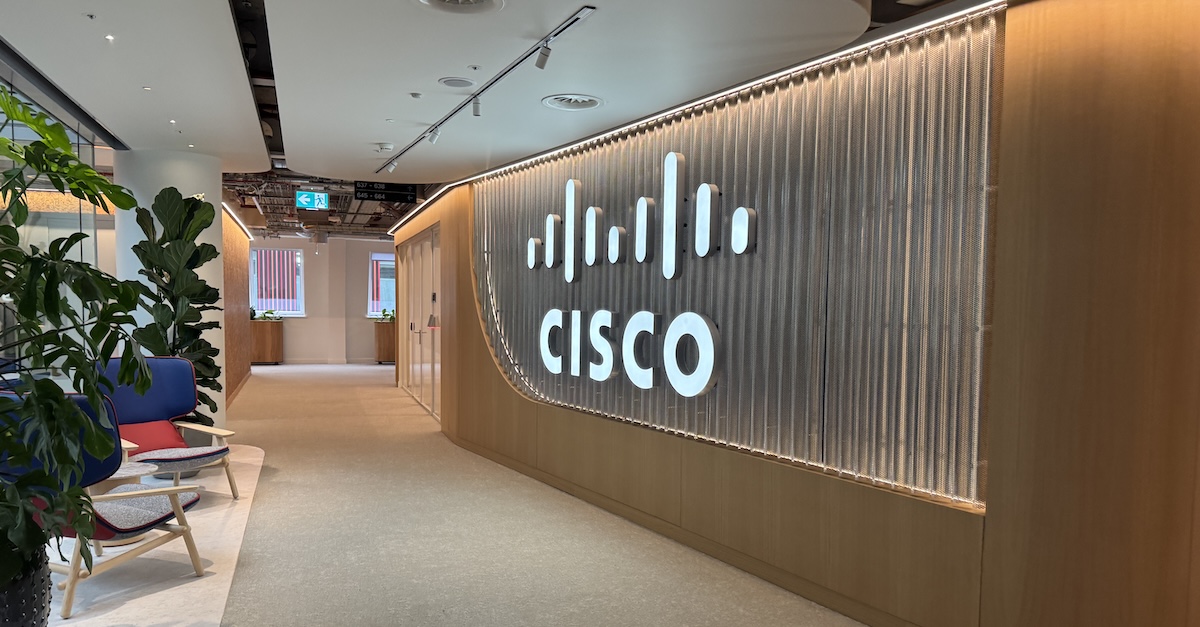
Last week, I (along with colleagues from Node4’s Office of the CTO) visited Cisco’s Smart Workspace in London and that description wasn’t far off what we experienced.
The London Smart Workspace opened in February 2025 and is the fifth iteration on Cisco’s estate (after New York, Chicago, Atlanta and Paris).
It’s not a glossy showroom. It’s a working environment built around the idea that when people make the effort to come together physically, the space should support collaboration properly.
Managing space like it matters
The first thing that struck me was how deliberately space is handled.
There are no fixed desks and there are meeting rooms of all sizes — from single person booths to large collaboration spaces.
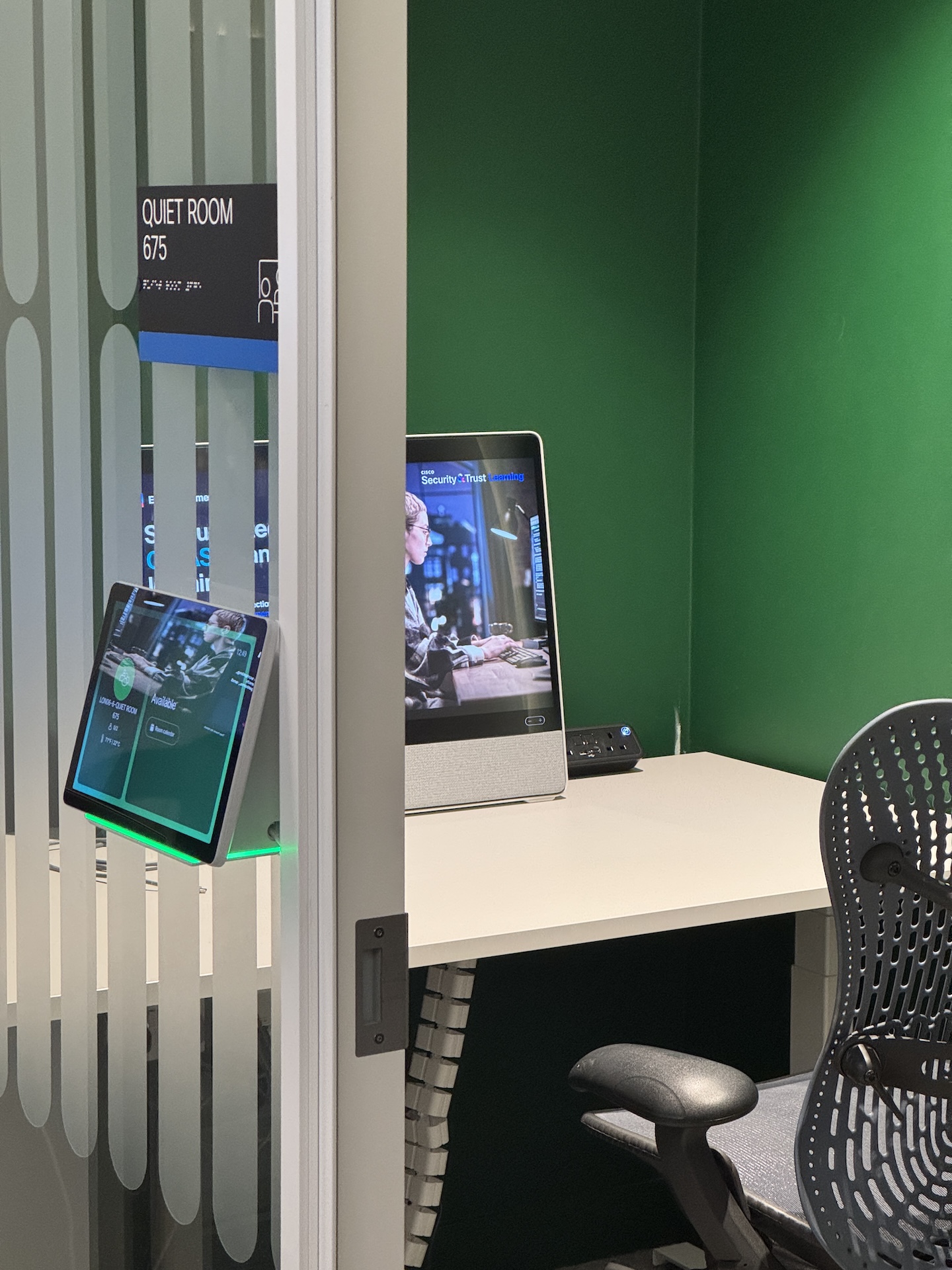
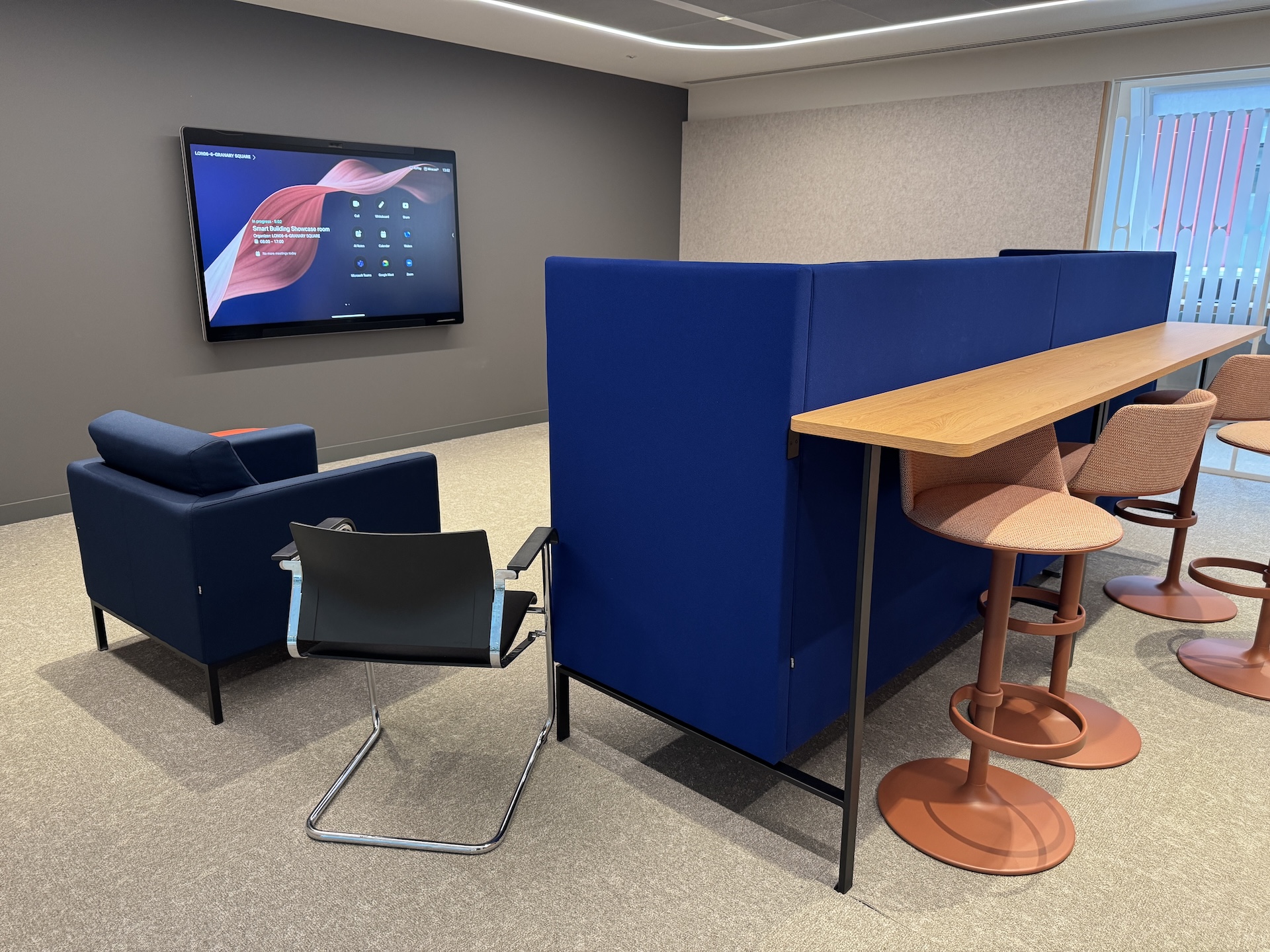
If a meeting doesn’t happen, the booking is released automatically. Larger bookings are handled through a concierge-style process rather than simply clicking a bigger room in a calendar.
The system avoids the familiar scenario of two people occupying a room built for ten while others wander the floor looking for somewhere to sit.
That might sound over-managed, but it’s really about fairness and visibility. Space is expensive. If you’re going to maintain it, you may as well use it well.
When organisational silos don’t help
Something else that came through in conversation was how closely human resources, facilities, and information technology (IT) teams need to work together to design spaces like this. Not as separate departments negotiating responsibilities, but as a joined-up function focused on the overall employee experience.
Once the building itself is part of the digital estate, those boundaries blur.
Lighting, room booking, collaboration platforms, air quality and occupancy data don’t sit neatly in a single traditional box. And when the building management system (BMS) is connected to the network, IT and operational technology (OT) stop being abstract ideas in a strategy deck and become part of day-to-day operations.
Infrastructure in plain sight
The open ceiling makes that integration visible.
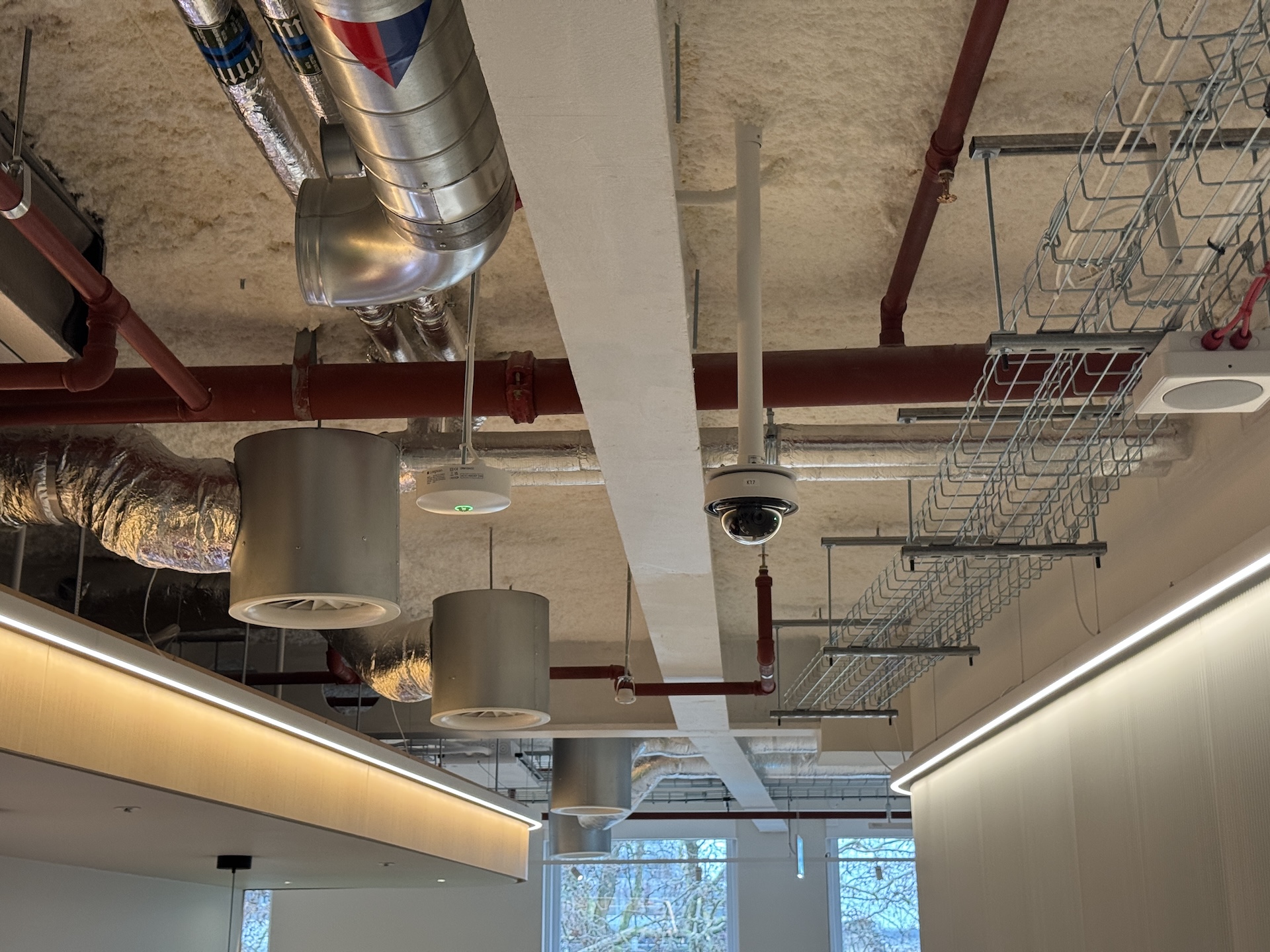
Power is delivered over the network. Lights, blinds, access points, sensors and video devices all use PoE. It’s practical rather than decorative, and it reflects the reality that modern workspaces are as much digital infrastructure as physical environment.
There are thousands of sensors across each floor measuring occupancy, environmental conditions and usage patterns. Air conditioning adjusts based on actual room use rather than fixed assumptions. That combination of real-time data and automation reduces energy use without compromising comfort.
Older sensors can be a security risk. Properly managed ones reduce risk while still providing useful insight.
In some cases, ultrasound is used for room awareness and proximity detection rather than Bluetooth, because it does not travel beyond doors and windows in the same way. It’s a small technical decision, but it shows the level of thought that has gone into the design.
This isn’t presented as an all-or-nothing transformation. The phrase used was “crawl, walk, run”. Start with obvious value. Expand once you understand the benefit.
Designed for collaboration, not hierarchy
The meeting rooms themselves felt considered rather than over-engineered.
They face natural light, with blinds that adjust automatically throughout the day. Plants and natural materials soften the space. Together, it reflects what designers would call a biophilic approach — bringing natural elements into the working environment to make it feel more human — but done in such a way that it doesn’t create a maintenance burden.
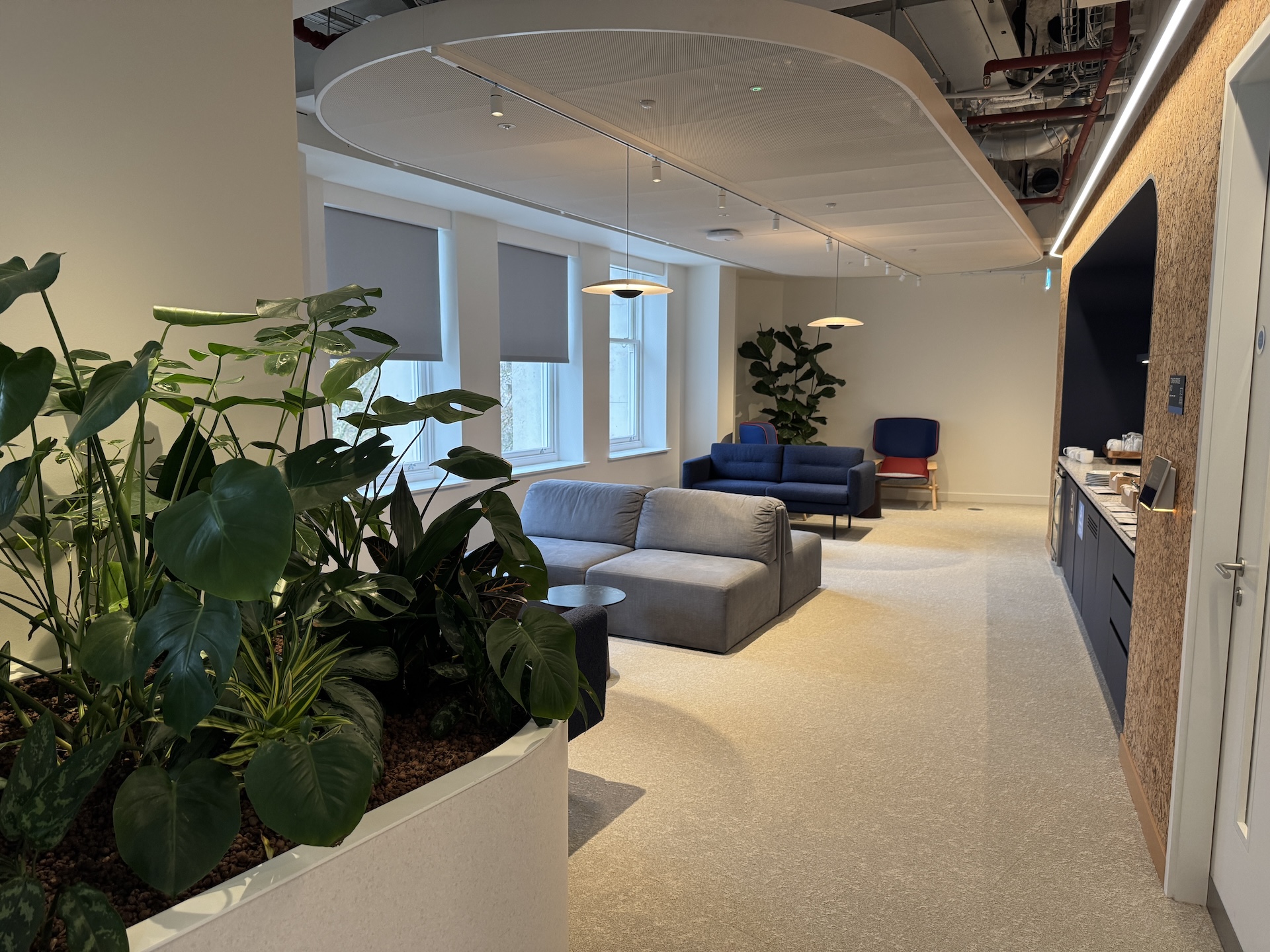
Acoustic treatment is built in and even the table shape is deliberate. I looked it up and apparently it’s an isosceles trapezoid (schoolboy Mark would probably have known that - just one of many facts I’ve forgotten over the past few decades). The shape means remote participants aren’t visually sidelined and no one sits at a symbolic “head of the table”.
Different areas are designed with varying levels of stimulation. Some spaces are more open and collaborative, others quieter and lower intensity. It’s a simple acknowledgement that not everyone works best in the same sensory environment.
These may sound like small things. But small design decisions add up. In sport, they would be called marginal gains.
The technology in the room follows the same thinking. It can detect how many people are present, where voices are coming from, and who is speaking — not just that “the room” is speaking. Facial processing happens locally at the edge rather than sending images to the cloud, and any user profiles are tokenised so they are not easily extractable.
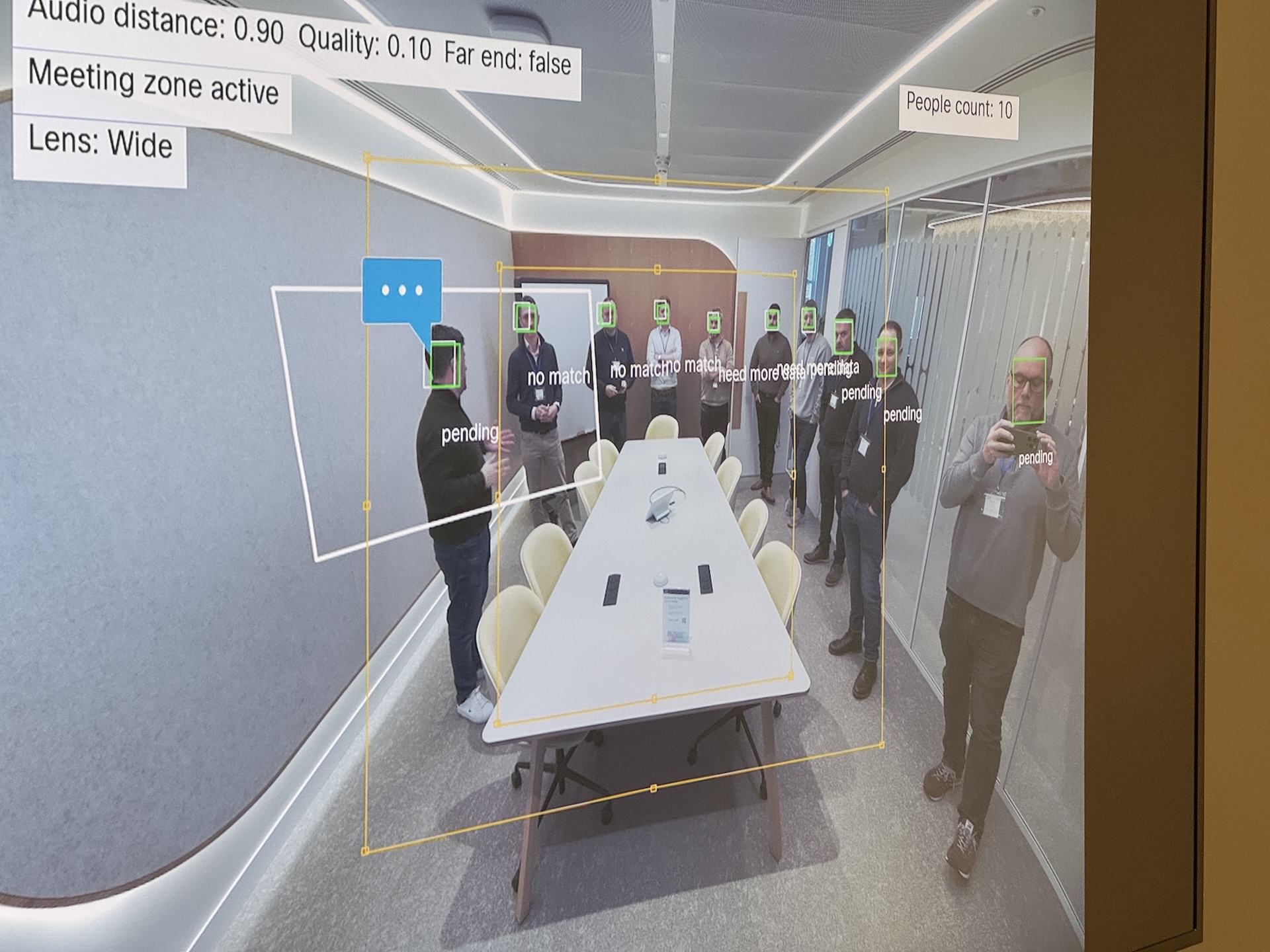
The aim isn’t surveillance. It’s to make hybrid meetings feel less awkward and less second-class for those who are not physically present.
You might expect that, in a Cisco office, everything would need to run Webex. Fortunately, that isn’t the case. Rooms can operate across multiple collaboration platforms rather than being locked to one. The equipment runs natively on Cisco’s RoomOS, allowing it to function as Microsoft Teams Room (MTR), Webex, Zoom or a SIP endpoint.
That flexibility matters. People shouldn’t have to think about infrastructure when they walk into a meeting. They should just get on with the conversation.
Getting around
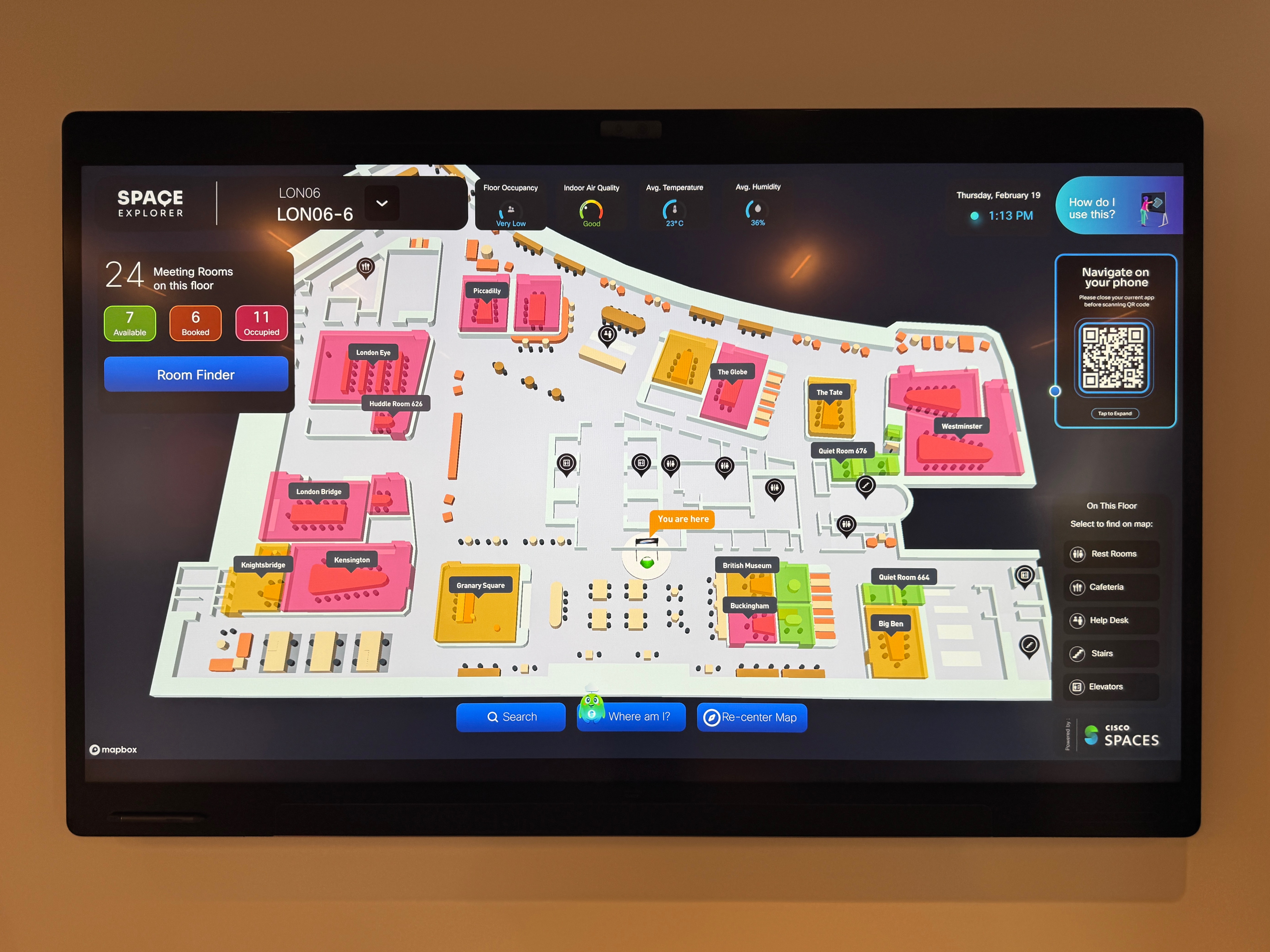
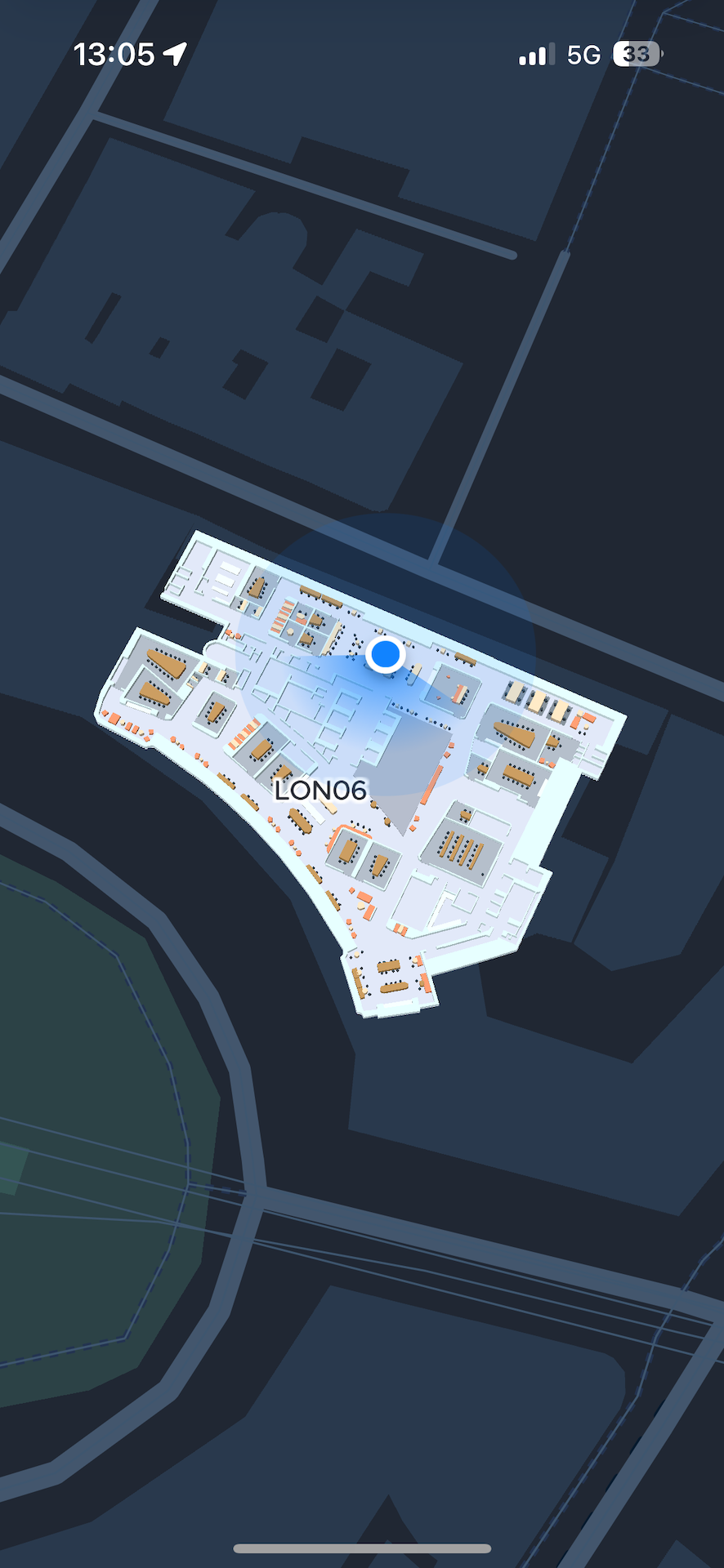
One of the most impressive features is the way that the office integrates with people. That sounds cringy and AI-written (it wasn’t, BTW) but wayfinding is handled simply. Scan a QR code and you can be directed to your room. Scan another and your collaboration profile follows you into the space. It doesn’t adjust desk height or lighting at one of the individual desks (yet), but the direction of travel is clear.
There are strategically-placed displays on the office walls to guide you, integrated with mobile apps.
An office that earns its keep
Out of hours, the building scales itself back. Lighting, heating and cooling adjust automatically based on actual use. That reduces cost and provides real data on how the space is used, rather than relying on assumptions.
Although there is significantly more embedded technology than in a traditional office, operating costs have reduced. Lower energy consumption is part of that equation.
All of this reinforces a simple point: if organisations want people in offices, the space has to offer something that home working does not. Not presenteeism. Not rows of desks. But a better environment for collaboration.
The technology already exists. The harder step is choosing to design work around people rather than around furniture layouts inherited from a different era.