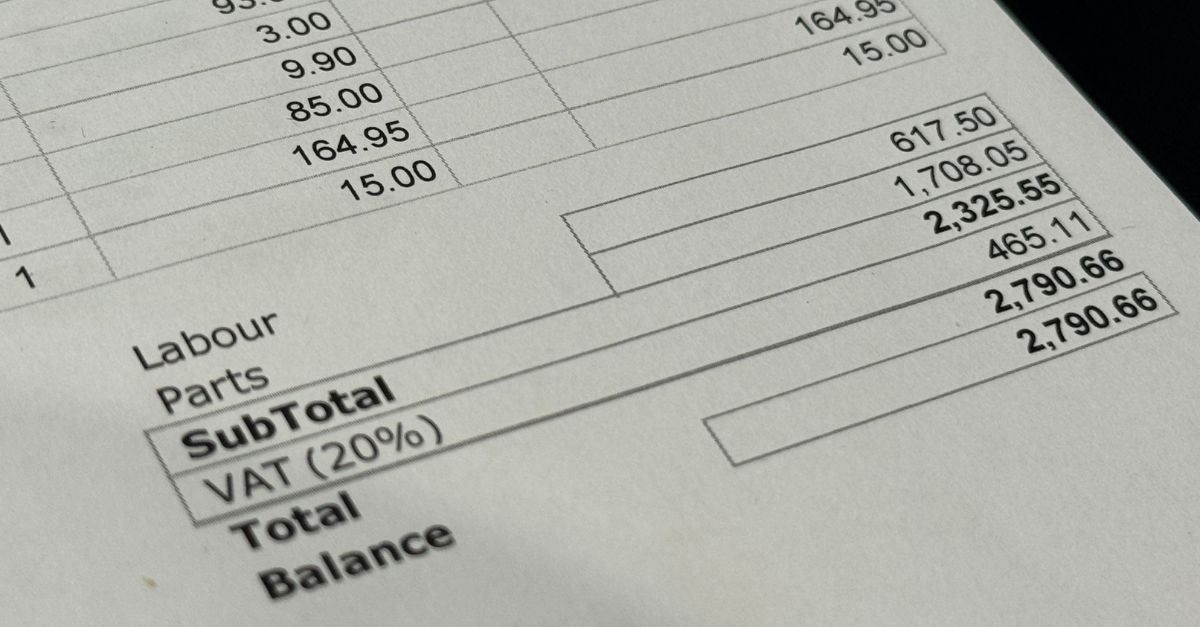
Today, I got my car back after a month-long repair. It started with a slightly unsettling experience when the steering failed. Not in a “that feels a bit heavy” sort of way, but completely. There was no ability to steer the car at all. The AA’s patrolman initially suggested I follow him to the garage until I pointed out that I literally couldn’t turn the wheels. (In the process of recovering my car, he also broke a connector on the electronic parking brake, but that’s another story.)
It got me thinking about how modern cars are put together, and what that means when something goes wrong.
From mechanical to electronic
Modern vehicles hide a lot of complexity beneath what still looks like a simple interface. In older cars, the steering wheel is connected to the wheels. It might be power-assisted, but the linkage is direct. If something wears out, you replace that part and move on.
On newer vehicles, the steering wheel is a controller - similar to one you might use with a driving game on a console. Turning the steering wheel is an input that is interpreted by a control unit, which then tells another system what to do. It works perfectly well until it doesn’t. The interface feels connected, but it really isn’t.
That pattern repeats across the car. Mechanical systems are now mediated by software and sensors. The added features improve the driving experience, but the complexity is easy to overlook until something fails.
Why small faults become big bills
When the steering failed on my car, it wasn’t a worn part. It was a complete unit — a sealed assembly. In this case, a £1600 component that wasn’t even in stock at Volvo’s central distribution centre in Gothenburg and took a few weeks to arrive.
The same applies elsewhere. What might once have been a minor repair can now mean replacing an entire assembly. On older cars, a worn suspension component might mean replacing a rubber boot. Now it is more likely to be a full suspension arm.
The effect is simple: faults that used to be small and local are now larger and more expensive to fix.
Complexity is not an accident
This is not poor design — it’s a deliberate consequence of how cars are built today.
Modern vehicles rely heavily on software and interconnected systems, managing everything from braking and stability to driver assistance features. Many of these features are expected or required, and they do make cars safer.
But each additional system brings more hardware, more software, and more potential failure points. When something breaks, it is rarely isolated, and it is usually expensive.
The cost of a middle-aged car
All of this adds up. The steering repair, labour, wheel alignment (tracking), and parking brake work have cost a sizeable sum on a seven-year-old car. Add in some tyres and brake pads (which are expected service items) and I had a significant bill shock.
All of this was on top of a timing belt replacement, front brakes and a major service a few thousand miles ago. In total, I’ve spent around £5000 on the car in the last 12 months. That’s roughly twice my annual budget for car maintenance.
At some point, I have to think about the sunk cost fallacy. But, for now, the plan is to keep it going, ideally long enough for a summer road trip across France, and then reassess.
Why the UK car market has shifted
For some time now, the UK car market has been built around finance, and servicing. Most new cars are acquired on PCP, HP or lease agreements — finance is used for the vast majority of new car purchases in the UK — and many are simply handed back at the end of the term rather than owned.
I bought my Volvo V60 nearly-new using a PCP and made the balloon payment to take ownership at the end of the agreement. Because the original list price was over £40,000, it still attracted the additional rate of vehicle excise duty for several years, even as a used car.
But £40,000 is no longer a luxury car. It means that running costs are increased for nearly-new cars, which is one of the reasons an all-in monthly charge looks more attractive.
That starts to make sense when you look at how cars behave in practice. When a single failure can cost four figures and take weeks to resolve, predictable monthly costs (e.g. leasing) and a warranty begin to look less like convenience and more like risk management.
Rethinking car ownership
Cars today are better than they have ever been. They are safer, more efficient and more capable. But they are no longer simple machines, and that has consequences.
Ownership now carries more uncertainty than it used to. Not because cars are worse, but because they are more complex, less repairable, and more expensive to fix when something goes wrong.
If the practical way to manage that risk is to hand the car back before anything expensive breaks, then it is worth asking a simple question:
Do we really want to own our vehicles, or just run someone else’s and give it back when the warranty ends?