
ABBA last performed in London in 1979.
And yet, yesterday afternoon, I was in an East London arena watching them perform. Except they weren’t really there.
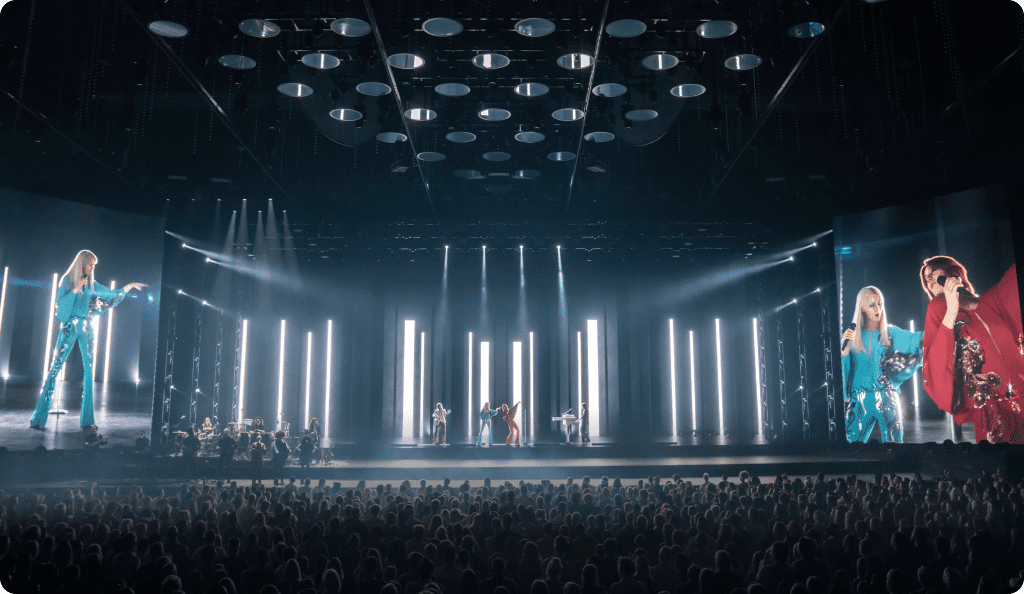
ABBA Voyage is not a reunion tour. It’s a new form of live performance, built on a blend of digital production, physical staging, and carefully engineered illusion.
Many reviews focus on the music and the spectacle, but that’s only part of the story. As a technologist, what makes ABBA Voyage notable is not that it recreates a band, but that it challenges what we mean by a “live” performance.
A mixed reality performance, not a hologram
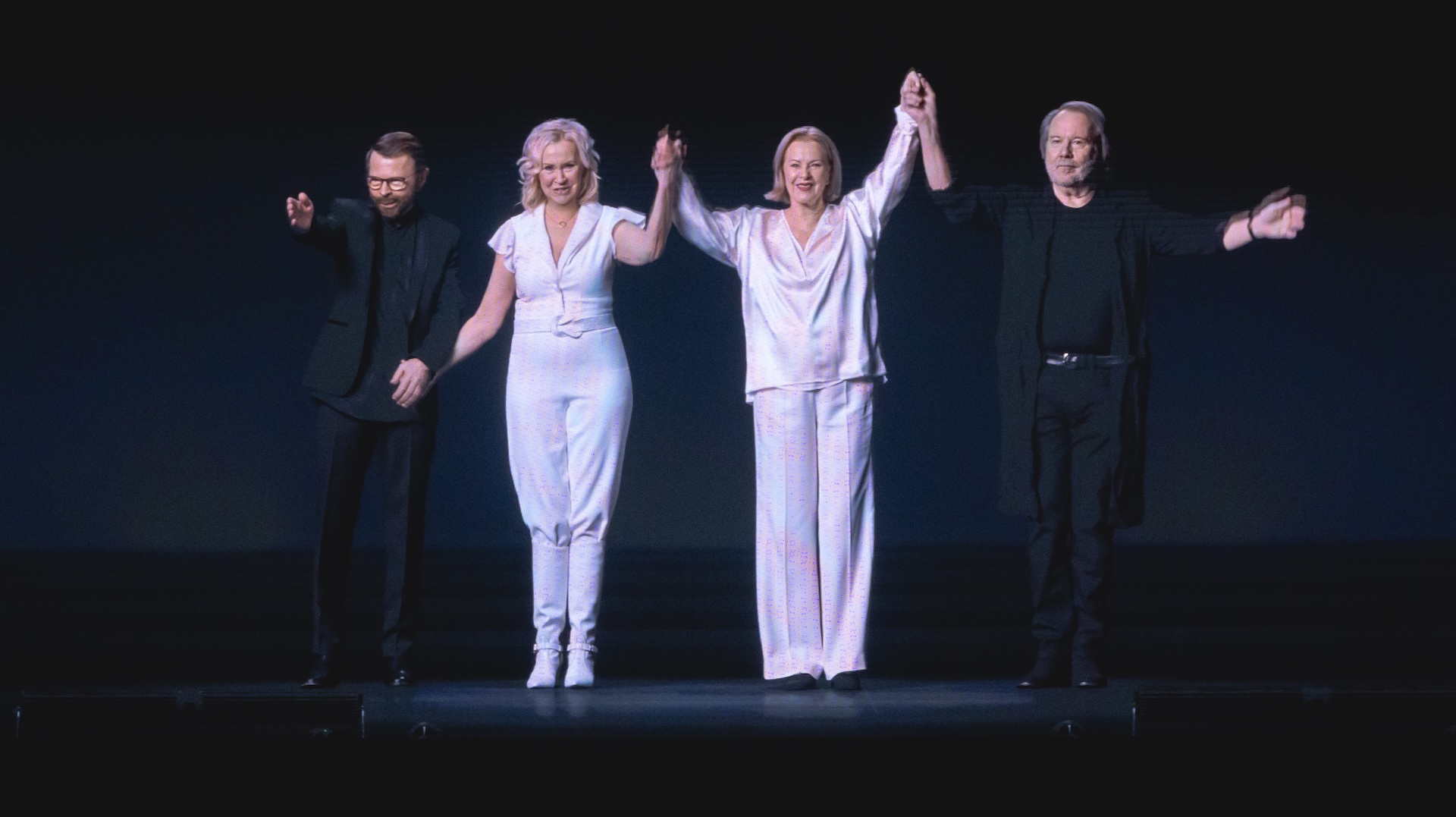
ABBA Voyage is often described as a hologram show. That’s convenient, but not really accurate. It’s not just a projection of flat images onto a stage, nor a simple visual trick. The show combines motion capture, visual effects, real-time rendering, and a physical stage environment. The digital performers, known as ABBAtars, were created by Industrial Light and Magic in collaboration with the band. The original members spent weeks in motion capture suits, effectively re-performing their younger selves.
Alongside that, there is a live band on stage. The music is real. The lighting is real. The environment is real. The result is a mixed reality performance where digital and physical elements are presented as one.
The illusion is engineered
What makes this work is not just the quality of the digital characters. It is how the entire experience is designed to guide perception.
Lighting plays a central role, shaping what you can see clearly and what you cannot. It directs your focus and, at times, deliberately hides the edges of the illusion. The live band anchors the experience, giving your brain something that is unquestionably real and making it easier to accept what you are seeing.
I spent a good part of the show trying to work out what was real and what was rendered. That lasted until a moment where the illusion did something that felt impossible. I won’t spoil it, but it was enough to make me exclaim “Wow!” out loud.
As Benny Andersson himself puts it:
“I think the only way to understand what this is you have to come and see it. It’s sort of non-explainable […] you need to go and see it.” — Benny Andersson, ABBA
Solving the uncanny valley problem
Digital humans often fall into what’s known as the uncanny valley. Close to real, but not quite right. The ABBAtars mostly avoid that.
Presenting ABBA as their 1970s selves helps. It removes the expectation of a perfect, present-day likeness and allows for a slightly stylised interpretation. More importantly, the performances feel human. Movement, timing, and interaction are convincing enough that you engage with them as performers rather than as effects.
That is what makes the illusion sustainable over an entire show, rather than just impressive for a few minutes.
Why this matters beyond ABBA
It would be easy to dismiss ABBA Voyage as a one-off built around a globally recognised band. I see it as a proof of concept for a different model of live entertainment.
Performances are no longer constrained by the physical presence of the artist. Shows can run continuously in a fixed location. The experience is consistent and repeatable. Performances can be preserved, recreated, or reimagined.
From a technology perspective, this is what happens when film production, game engine thinking, and live event design converge. The business model is just as interesting, built around a permanent venue and a long-running production rather than a touring schedule.
Culturally, it raises a simple question: what does “live” actually mean?
A brilliant show, built on something bigger
It is worth saying this clearly: ABBA Voyage is a brilliant show.
(It also messed with my head a little.)
The technology is impressive, but it never feels like the point. It serves the performance rather than distracting from it. The music, the energy, and the atmosphere all land exactly as you would want them to. Without that, none of the rest would matter.
There is also a personal thread running through it. ABBA were one of the few bands that worked across generations when I was growing up. They were a constant on car journeys, and I remember saving Christmas money to buy their albums. I was too young to see them live.
And yet, somehow, I now have.
Sort of.
Where this goes next
ABBA Voyage is unlikely to remain unique for long. The underlying technologies are already well understood. What is new is how they have been combined, refined, and delivered at scale.
It is easy to imagine what comes next. Legacy artists returning without touring. Performances running in multiple locations. New acts designing shows that blend digital and physical elements from the outset.
This does not replace traditional live music. It does something different. It trades spontaneity for precision, and physical presence for creative control.
Closing thoughts
What ABBA Voyage demonstrates is not just that this kind of show is possible, but that it works as a format.
It shows that audiences are willing to accept a performance that is not physically live, as long as it feels live. That distinction matters because it opens the door to new ways of creating, distributing, and experiencing performance.
For decades, technology has supported live entertainment from the sidelines. This feels like a shift. Not technology enhancing the performance, but technology becoming the performance.
Credits
- ABBAtars and performance image © Aniara Ltd, 2022 used under the fair dealing provisions of UK Copyright law.
- ABBA curtain call image by Raph_PH via Wikimedia licensed under the Creative Commons Attribution 2.0 Generic license.
