“It just needs to get me across France and back, and then I’ll replace it.”
Those were my words after a rather large bill that sealed my Volvo V60’s fate.
A few months ago, I wrote about the hidden cost of complexity in modern cars. I argued that today’s vehicles are increasingly defined by software, and that this complexity ultimately makes them more expensive to own and maintain. I hadn’t expected my own car to provide another perfect example quite so soon.
It’s been a great car, but it’s eight years old now and things are starting to go wrong. A new steering rack, along with fitting, replacement tyres, tracking and brake pads, came to almost £3,000 of unexpected expenditure. To be fair, the tyres and brakes were expected, but I’d already started thinking about replacing the car when another warning appeared on the dashboard.
A warning
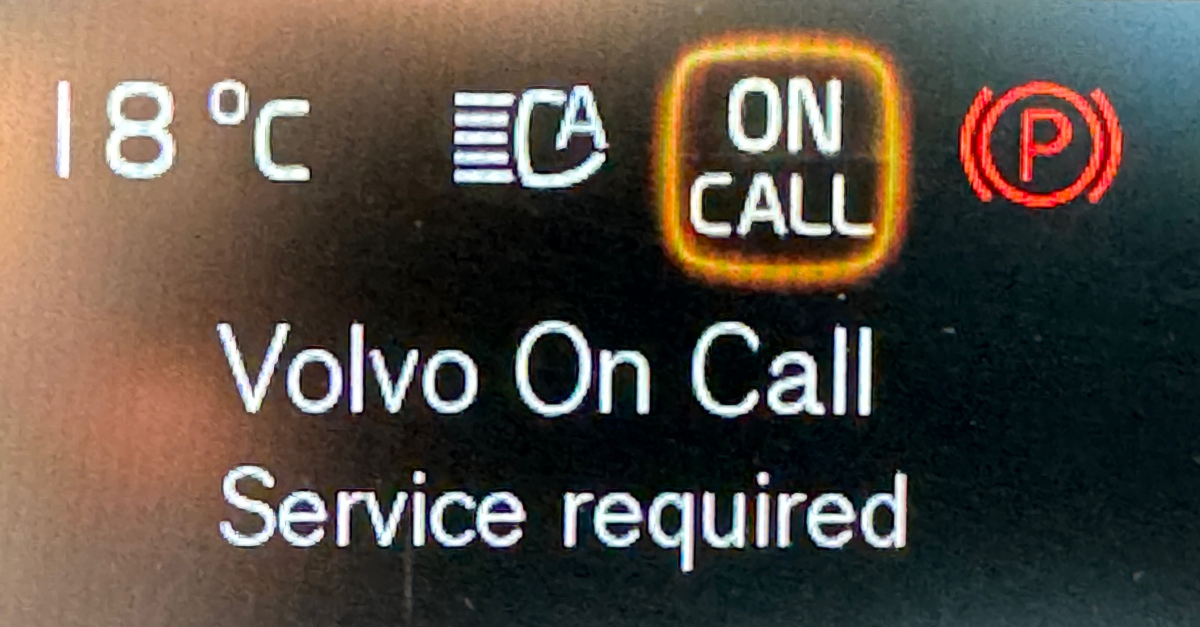
Halfway through a road trip across France, the message appeared:
Volvo On Call. Service required.
My first thought was some dodgy fuel from an unattended rural petrol station where I’d filled up earlier that day. The car was running perfectly normally though, so I kept driving. Remote support was only likely to result in an expensive visit to a franchised dealer. From that point on I filled up with premium diesel, just in case, but nothing changed. The warning remained, while the car continued to drive without issue.
Back in the UK, I called Avalon Cars, the independent Volvo specialist I’ve used ever since the car came off warranty. They use OEM parts and the same diagnostic equipment and software as the main dealers, but the labour rate is merely expensive rather than extortionate.
They asked what message I’d seen and immediately told me what the problem would be. They didn’t even need to see the car.
Spoiler: it wasn’t the fuel.
An eight-year timer
It turned out to be the backup battery for the Volvo On Call (emergency and remote services) system. Not because it had failed. Not because it had been tested and found to be at the end of its life. Simply because the software decides that, eight years after the car was built, it’s time to replace it.
I could ignore it, but I’d have to dismiss the warning every time I start the car. And since I want to sell it in a few months, I’d rather not advertise it with a warning message on the dashboard.
The fix? £222 for the battery, an hour’s labour and a software update.
Nobody tells you when you buy a car that one day it will celebrate its eighth birthday with a service bill.
It also made me wonder how many more arbitrary timers are quietly counting down in the background, waiting for their turn.
Rethinking ownership
More importantly, it reinforced the conclusion I’d already reached. Cars are becoming software platforms first and mechanical products second. Parts are coded to the vehicle. Components are increasingly replaced as complete assemblies rather than individual parts. Even seemingly straightforward maintenance often requires dealer software. Some features are offered on a subscription basis. Whether intentionally or not, the ownership experience is becoming one that’s difficult to separate from the manufacturer’s service network.
Perhaps that’s why this doesn’t receive more attention. Many new cars are financed and replaced every three or four years. By the time arbitrary eight-year maintenance timers appear, the original owner is long gone. As my brother put it, that’s not something you mention when selling the car. It’s someone else’s problem by then.
Yesterday, I ordered an electric vehicle on a lease.
It’s expensive — more expensive than I would have liked — but I know exactly what I’ll be paying each month. The insurance is included, servicing is covered and the legal costs (VED, etc.) are taken care of. All I need to worry about is charging it, and that should cost less than diesel.
I’ll be tied into a subscription for years to come, but at least the costs won’t be hidden.