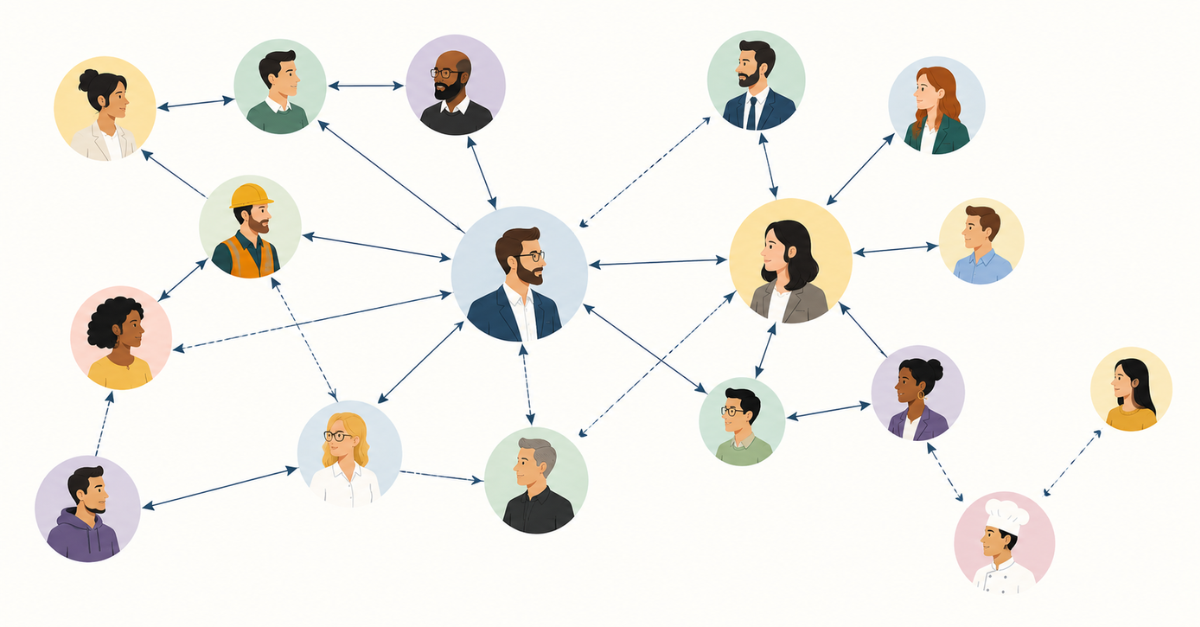
LinkedIn is a network, not an audience
I’ve been on LinkedIn for almost twenty years. I was one of the first million users in the UK.
When I joined, it wasn’t a social media platform. It was a professional networking site where you kept in touch with colleagues, customers and people you’d met at conferences. If you changed jobs, LinkedIn helped you stay connected.
Since then, LinkedIn has changed enormously. Today it’s full of creators, influencers, newsletters, videos and people who’ve built businesses around their LinkedIn presence.
Which makes me wonder if I’m the one who’s got it wrong.
When LinkedIn was just LinkedIn
A few months ago, someone I know in the AI community suggested I was missing a trick.
She pointed out that I don’t accept every connection request. If I did, my posts would reach far more people. And she’s right. If my goal was to maximise the reach of my posts, then accepting every invitation would almost certainly help.
It made me realise that we were using LinkedIn for completely different things. She sees it as a platform for building an audience. I still think of it as somewhere to stay in touch with people I know and trust.
A connection isn’t a relationship
As I write this, I have 169 unanswered connection requests sitting in my LinkedIn inbox.
All are from people I don’t recognise. Some are clearly hoping to sell me something. Others may have mutual connections, but no explanation of who they are or why they’d like to connect. Most contain no message at all.
I sort of understand the lack of a message because I don’t subscribe to LinkedIn Premium, so I’m limited in the number of personalised invitations I can send each month. That isn’t really a problem because, most of the time, we’ve already had the conversation.
If I’ve met someone at a conference, after a presentation or during a customer meeting, I’ll usually mention that I’ll connect with them on LinkedIn. Sometimes we’ll do it there and then. Sometimes I’ll send the invitation later that day. Either way, it’s simply a continuation of a conversation we’ve already had.
That’s why so many unsolicited connection requests feel odd to me.
Imagine receiving an email that simply said:
Hello.
Will you reply?
No introduction. No context. No explanation of why the sender had contacted you. You’d probably ignore it. So why is that considered acceptable on LinkedIn?
LinkedIn makes it easy to collect connections. That’s not the same as building a network.
The coffee test
For many years, I was very active on Twitter. Like many people, I shared all sorts of things: technology, photography, family life, holidays and the occasional random observation. It was social media in the broadest sense.
LinkedIn was different. It was where I connected with colleagues, customers and people I’d met at events.
Over the last few years, those worlds have started to overlap. As Twitter became X and declined, many people moved to LinkedIn and brought their posting habits with them. The platform changed, and perhaps the expectations changed too.
These days, I have a simple test before I post something on LinkedIn. Is it something I’d naturally talk about over coffee with a business contact?
Sometimes that’s a technology observation. Sometimes it’s a conference I’ve attended, or an article I’ve written. Occasionally it’s something more personal, because working relationships are built between people, not job titles.
But there are plenty of things that don’t pass that test. Years ago, I’d happily have shared photos of my sons’ sporting achievements on social media. Today, I wouldn’t normally post those on LinkedIn (though there may be some exceptions as they take their steps into the world of work). Not because I’m trying to keep my personal life secret, but because they belong somewhere else.
It’s entirely possible that I’m using LinkedIn as it was, rather than as it is.
My role certainly involves sharing ideas. I write articles, speak at events, represent Node4 and help organisations make sense of technology. LinkedIn is an important part of that.
But I don’t think those conversations are valuable just because they reach more people. They’re valuable because they’re built on relationships. The network comes first.
Perhaps one day I’ll decide I’ve been looking at LinkedIn the wrong way all along. Perhaps the platform has changed and I haven’t changed with it.
But I’m OK with that.
I’d still rather have a network than an audience.