Sovereign AI: preserving choice in an intelligent world
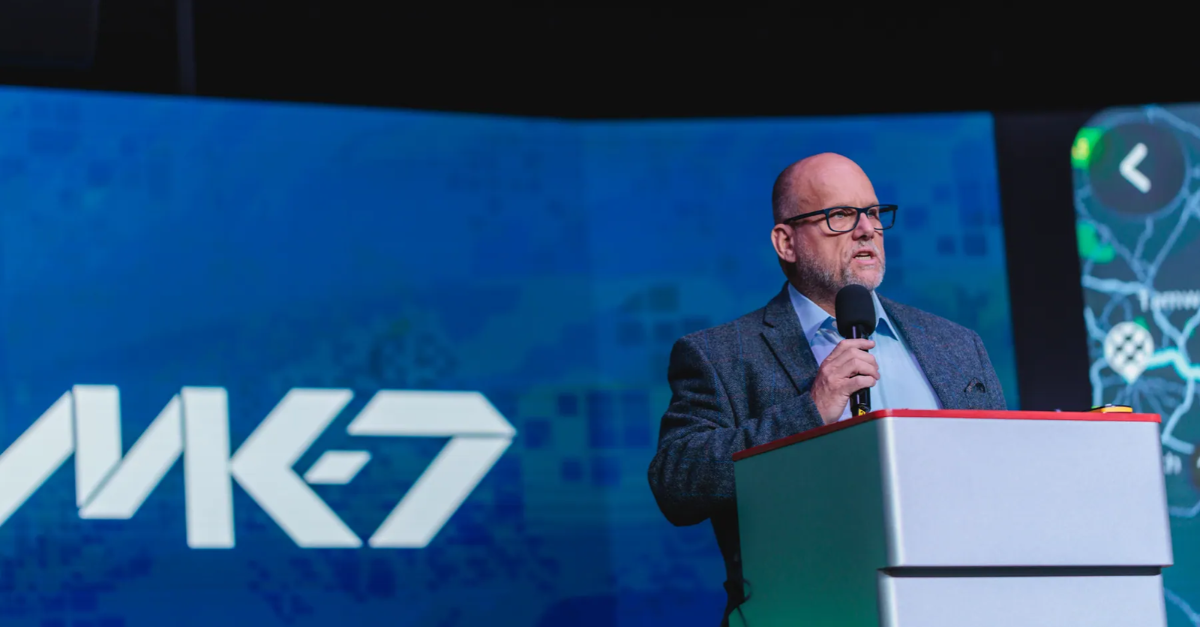
It’s not every day that I get to present at the Red Bull Technology Campus MK-7 Events Venue in Milton Keynes. Well, last month, as part of Milton Keynes Tech Week, BletchleyAI hosted an event at this fantastic venue, and I was fortunate enough to be one of the speakers.
It was a brilliant experience, made even better by the fact that Emily Darlington, MP for Milton Keynes Central, spoke immediately before me. Emily spoke about the UK’s AI opportunity, with Milton Keynes at its heart, providing an excellent introduction to some of the issues I wanted to explore in my own 20-minute session.
I’d delivered a similar talk at BirminghamAI the previous month, but the Bletchley event gave me another opportunity to explore a subject that’s already attracting considerable attention. As organisations move beyond AI experimentation and embed it in their operations, questions about sovereignty, control and dependency are becoming increasingly important.
My talk was titled “Sovereign AI: preserving choice in an intelligent world” (slides available here). Despite the title, this wasn’t really a discussion about where to host AI models, or whether UK organisations should avoid American technology providers. It was about understanding our dependencies and retaining meaningful choices when circumstances change.
From road atlases to artificial intelligence
Twenty years ago, I kept a road atlas in my car. Today, I enter a destination into Waze, connect my phone to CarPlay and follow the directions.
It’s brilliant. But that convenience comes with dependencies on GPS, connectivity, mapping data and the organisations providing those services. Most of the time, we don’t think about any of that. Everything just works.
Of course, we’ve all seen examples of drivers blindly following their sat-nav into unsuitable roads. The technology may have provided a perfectly valid route for a car, but the driver failed to recognise its limitations or apply their own judgement.
We’re increasingly using AI in much the same way, consuming intelligence as a service, sometimes without even realising it because AI functionality is embedded in the applications and business processes we already use.
But what happens when something changes? A provider introduces new pricing, removes a capability or restricts access. Suddenly, an organisation discovers just how dependent it has become on something it doesn’t control.
Dependence isn’t necessarily the problem. Failing to recognise it might be.
AI is becoming infrastructure
Electricity, internet connectivity, GPS and cloud computing have all become capabilities we expect to be available whenever we need them. But most organisations don’t generate their own electricity, and many have moved away from running parts of their own computing infrastructure, choosing instead to consume services from cloud providers.
AI is already being consumed in much the same way. For most users, it arrives through applications and SaaS platforms, often as functionality added to products they already use. Others access models through APIs and managed services, while a smaller number develop or operate their own AI infrastructure.
As AI becomes embedded in everyday operations, losing access, experiencing service disruption or facing unexpected costs could have serious consequences. Organisations may become dependent on AI capabilities without ever having made an explicit decision to adopt a particular model or provider.
We spend plenty of time discussing which AI model performs best or what the latest agents can achieve. We should also be asking who controls the capabilities we’re becoming dependent upon, and what alternatives exist if circumstances change.
Sovereignty is about more than location
When people talk about sovereign AI, the conversation often starts with where the data is stored or where the models run. Both matter, but they’re only part of the picture.
In my presentation, I identified six areas of dependency: data, models, infrastructure, operations, economics and skills.
An organisation might run AI on its own infrastructure but still depend on external suppliers for models, maintenance or specialist expertise. Conversely, using a global cloud provider doesn’t automatically mean surrendering meaningful control.
I shared an example of an organisation that invested in local GPU infrastructure and models to gain greater control over its AI capabilities and costs. That provided more control over where processing happened, but it also introduced operational responsibilities that hadn’t been fully considered. Who would maintain the models and agents? Who would monitor performance and consumption? Who would manage security, incidents and updates?
These responsibilities don’t disappear once the hardware is installed.
There’s an interesting parallel with email. Over the past couple of decades, many organisations moved their email systems to cloud services, accepting greater dependence on external providers in exchange for reduced operational complexity. Now, in pursuit of sovereign AI, some organisations are considering bringing key infrastructure and services back under their direct control.
That may be entirely appropriate, but it means taking responsibility for operating and maintaining those services, along with the skills and costs involved. Sovereignty requires us to consider those operational dependencies alongside questions of data residency and infrastructure ownership.
Owning more technology can give us greater control, but it also brings greater responsibility.
Moving beyond sovereignty claims
As more technology providers promote their sovereign AI credentials, we need to look beyond the marketing.
“Our data stays in-country” sounds reassuring, but what about prompts, telemetry and metadata? “We run locally” tells us where the computing takes place, but not necessarily who controls the models or operates the service.
My colleague, Andy Slater, introduced me to an interesting assessment model at sovereignty.posetiv.co.uk. It provides a structured way to examine sovereignty claims, asking for evidence that can be verified rather than simply accepting a supplier’s assurances.
The approach encourages us to move from claims to evidence, verification and confidence. So, rather than treating sovereignty as a simple yes-or-no question, we should be asking who controls the service, which laws apply, what dependencies remain and whether we could realistically change providers.
The answers will vary between organisations and use cases.
Not everything needs maximum sovereignty
If I’m using AI to plan a holiday, I’m comfortable accepting considerable dependency. If it’s supporting healthcare or critical infrastructure, I’d expect a very different level of control.
Maximum sovereignty everywhere would be expensive, complicated and, in many cases, unnecessary. We need to understand the risks, make informed decisions and retain appropriate control over the capabilities that matter.
It’s much easier to preserve those choices before a dependency becomes essential.
Keeping our options open
I finished the presentation by returning to the navigation analogy. I might normally follow Waze, but I can choose another route, consult a paper map or even take the train.
Organisations need equivalent choices for AI, especially as it becomes part of their everyday operations.
Sovereign AI isn’t about owning everything. It’s about ensuring we still have choices when circumstances change.
PostScript
The Bletchley AI event was about much more than my presentation. Stephanie Okumi opened proceedings with a series of One Minute Wonders, featuring Laura Graham-Brown, Zee Bielske, Steve Lamb and Yatindra Ranpura. Phil Kermeen followed my talk with his regular AI News and Views feature, before hosting a panel discussion with Manish Patel, Russell Bundy, Stephanie Stasey and me.
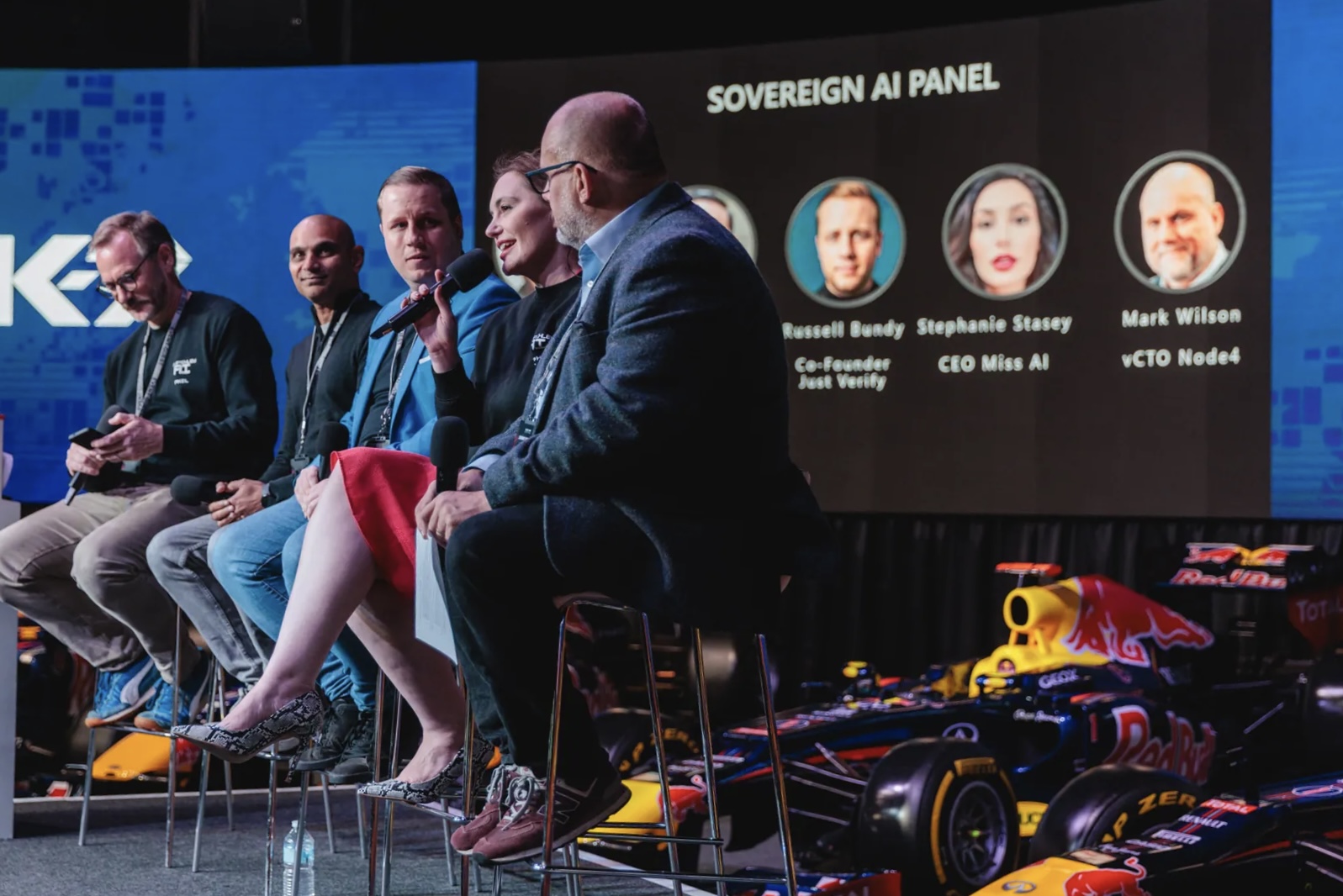
I think this might have been our best Bletchley AI event yet! My thanks to everyone involved in organising it, to the other speakers and panellists, and to everyone who attended. I particularly appreciated the conversations and feedback afterwards.
If you’d like to join us at a future event, take a look at UK AI User Groups and Bletchley AI.
I delivered this presentation in a personal capacity. My professional role is vCTO at Node4.
Image credits: Chris Henley/Milton Keynes Tech Week.