After eight years with my Volvo V60, I’ve made the switch to electric motoring with a new Škoda Enyaq 85. The Volvo had some useful connected services, including checking whether I’d locked the doors and remotely starting the car on cold winter mornings. But an electric vehicle introduces a whole new set of data to explore, particularly around battery charge, energy consumption and electricity costs.
I wanted to bring that data into Home Assistant.
Getting started
My Enyaq arrived on 5 November, although the Octopus Charge home charger, supplied as part of the lease, had been installed during the summer.
Unfortunately, after the car was delivered, I found my charger wasn’t playing ball. A visit to a nearby InstaVolt rapid charger confirmed that the car could charge, and Octopus Energy support subsequently resolved the problem by remotely resetting the home charger.
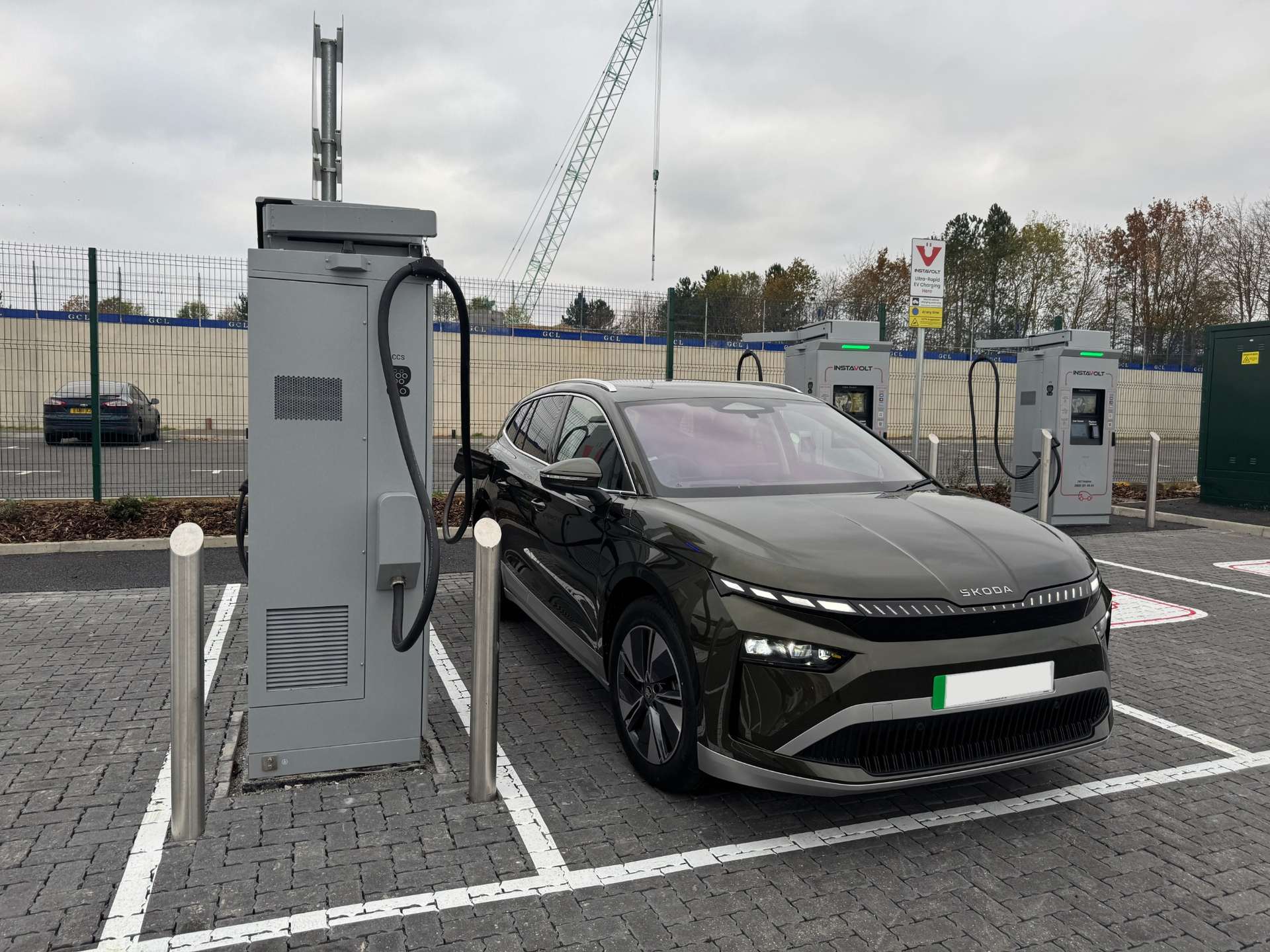
After the charger was remotely reset, I was able to confirm that it worked with a short boost charge, and then I left it for a full, scheduled overnight charge..
Bringing the data into Home Assistant
The timing was fortunate. Home Assistant 2026.11, released the day before my car arrived, introduced an official Škoda integration. After enabling the Smart Home API in MyŠkoda and obtaining an API key, I could access battery level, estimated range, charging status and charging power in Home Assistant.
The integration uses Škoda’s cloud service, so updates aren’t instantaneous, but they’re frequent enough for monitoring charging.
I already had the community-developed Octopus Energy integration, together with an Octopus Home Mini, providing electricity pricing and near-real-time household demand.
Combining these data sources makes it possible to monitor charging alongside household electricity consumption and estimate the associated costs.
Calculating charging costs
I’m currently on an Octopus fixed tariff rather than an Intelligent EV tariff. My overnight electricity costs approximately 9.48p/kWh between 00:30 and 07:30, compared with around 25.42p/kWh during the day. Although Intelligent tariffs offer cheaper overnight electricity, my existing tariff provides seven hours at the lower rate (rather than six), with a lower daytime rate. Given our household’s annual electricity consumption of around 6000kWh before adding the car, the whole-house cost matters.
To estimate charging costs (and with assistance from ChatGPT), I created five Home Assistant helpers. These accumulate the car’s reported charging power to calculate energy consumption in kWh, and combine that power with the current Octopus electricity rate to estimate costs. Daily totals are calculated using Utility Meters.
The results aren’t billing-grade measurements. Charging losses and delays in cloud telemetry introduce some uncertainty, and the calculation currently applies my domestic tariff even when charging away from home. That’s a limitation I’d like to address, eventually.
The dashboard
Next, I built a dedicated Home Assistant dashboard that brings everything together.
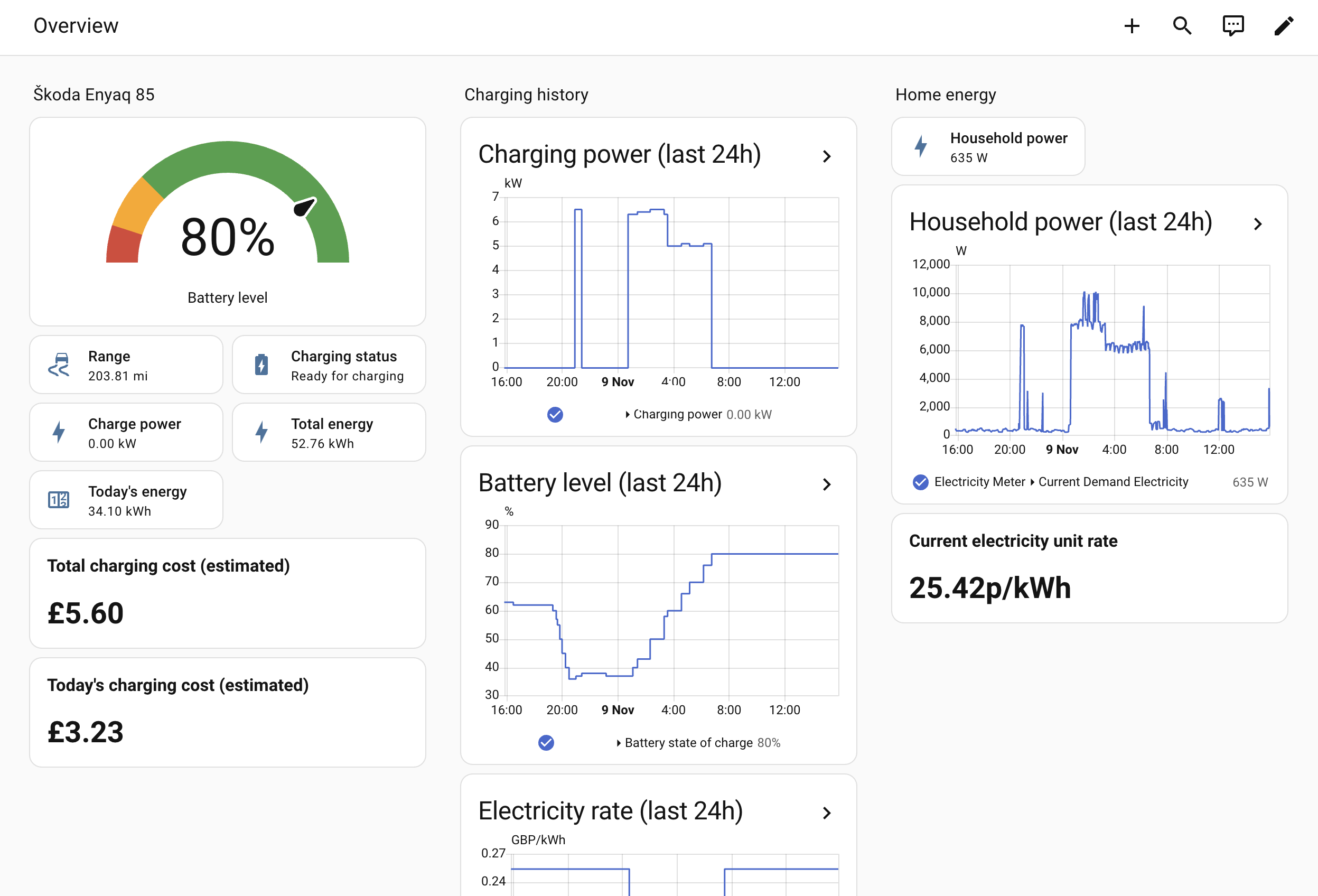
It has three sections: vehicle information and charging totals; 24-hour graphs of charging power, battery level and electricity pricing; and household electricity demand with the current tariff.
I also added mobile notifications for starting and stopping charging, with a two-minute delay to avoid transient state changes. The MyŠkoda app already notifies me when charging ends, but the Home Assistant charging-start notification is useful confirmation that a scheduled charge has actually begun.
None of this requires my Home Assistant installation to be exposed directly to the Internet. It retrieves the vehicle information from Škoda’s cloud service, and notifications can be delivered to my phone.
Sharing the configuration
I’ve published the dashboard, five helpers and two optional notification automations as a documented, anonymised GitHub Gist, released under the MIT licence: Škoda Enyaq EV charging dashboard for Home Assistant
This configuration has been developed and tested with my 2026 Škoda Enyaq 85. However, the underlying techniques — monitoring charging power, estimating energy consumption and costs, and triggering notifications from charging status changes — should be adaptable to other vehicle manufacturers with suitable Home Assistant integrations. The Gist explains what’s needed to reproduce the setup.
What’s next?
I’d particularly like to distinguish charging at home from charging elsewhere, so that public charging isn’t incorrectly priced at my domestic electricity rate. Work in progress on the Octopus Energy integration may eventually expose more information from Octopus Charge to help with this.
For now, I have a useful view of when my Enyaq is charging, how much energy it’s consuming and approximately what it’s costing me. Not bad for the first few days of EV ownership.